 Department of Systems Engineering
 Faculty NT - Natural Sciences and Technology
Select your language


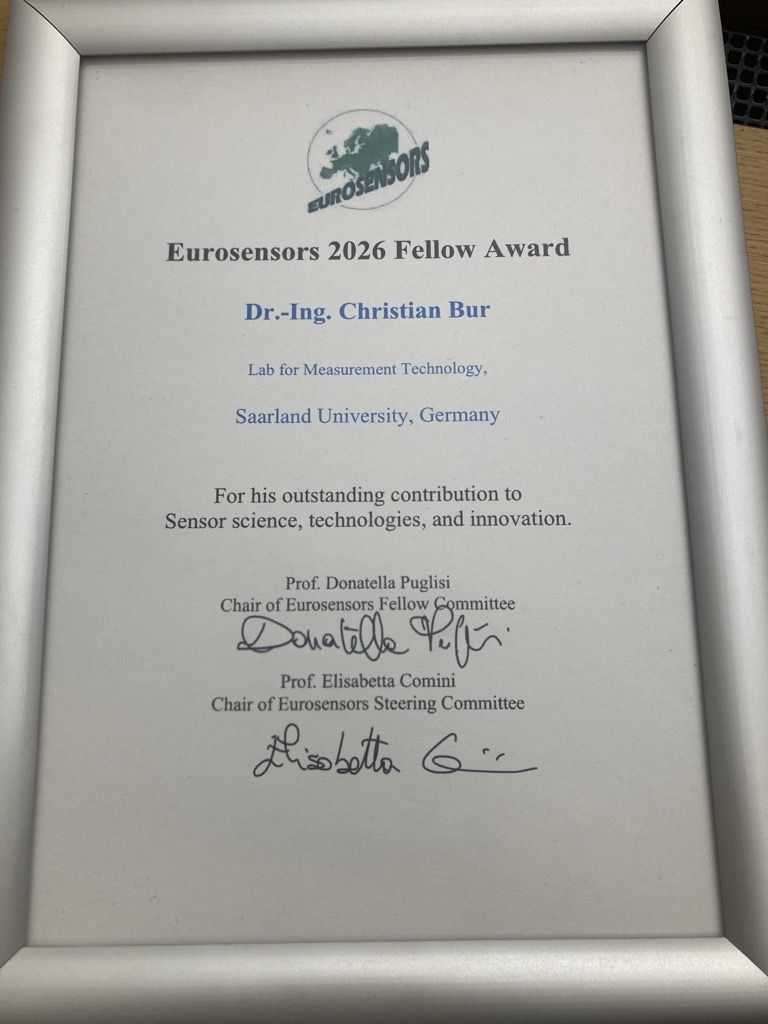
for his outstanding contributions to sensor science, technologies, and innovation.
Christian has been a regular participant and contributor to the Eurosensors conference series since Eurosensors 2013, held jointly with Transducers in Barcelona during his time as PhD student. Christian completed the dual degree PhD between Linköping University and Saarland University in 2015 with a thesis titled "Selectivity Enhancement of Gas Sensitive Field Effect Transistors by Dynamic Operation".
Including this years contributions, Christian has co-authored 14 contributions to Eurosensors and has also supported the conference as reviewer. In Zurich, he will also chair one of the sessions on chemical sensors.
 Continuous monitoring of indoor air to assess health and wellbeing, smart sheets that monitor sleep quality and miniaturized hearing aids – international partners in academia and industry are collaborating on the SensorTech4Health project to develop novel technology that monitors the surrounding environment to continuously gauge health. Whether integrated into a smart home system or as a discreet wearable, these new technologies aim to monitor health and wellbeing and increase quality of life.
Against the backdrop of an ageing population and high care costs, the project sets out to use prevention to help people remain fit and independent for longer. Bosch Sensortec is coordinating the project, which has received 15 million euros from national funding organizations within the EUREKA Cluster Xecs.
Gas sensors find single molecules among billions
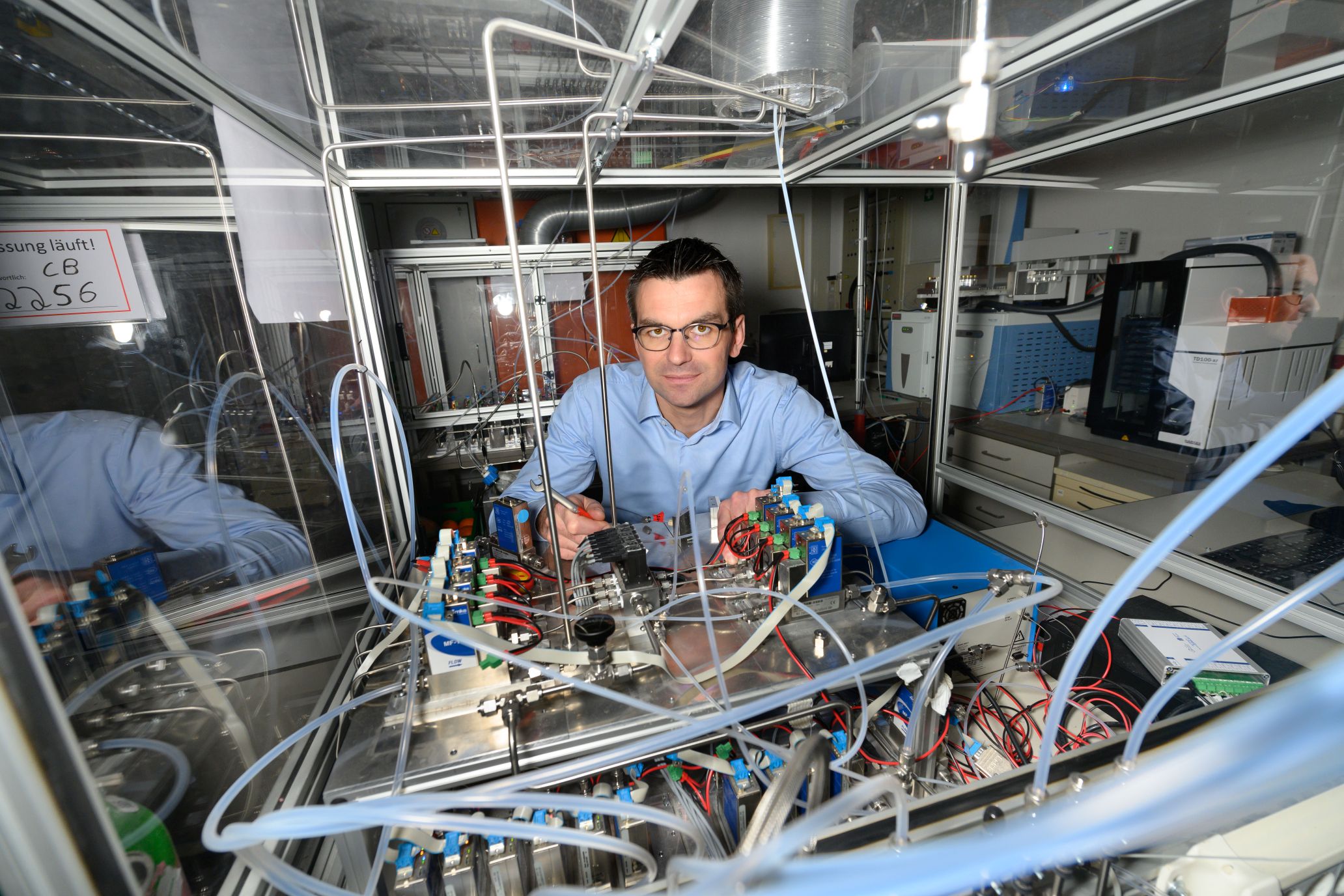
One of the main goals of the project is to support health and well-being using novel gas sensor technologies. The researchers are making use of a particular phenomenon in the body to do so. 'The body is constantly producing metabolic products that are released into the environment through the skin and breath,' explains Christian Bur, the postdoc who leads the medical gas sensor research team in Andreas Schütze's measurement technologies research group at Saarland University. The molecular compounds that the body releases into the air have distinctive characteristics, yet we are not usually able to smell them. Bur develops gas sensor systems that can take exact measurements of these volatile organic compounds.
SensorTech4Health Consortium joint press release
More on SensorTech4Health project
The SensorTech4Health project brings together partners from academia and industry in the field of digital health. The international collaboration has received 15 million euros of funding from national agencies within the EUREKA Cluster Xecs. German project partners received funding from the Federal Ministry of Research, Technology and Space through VDI/VDE Innovation + Technik GmbH.

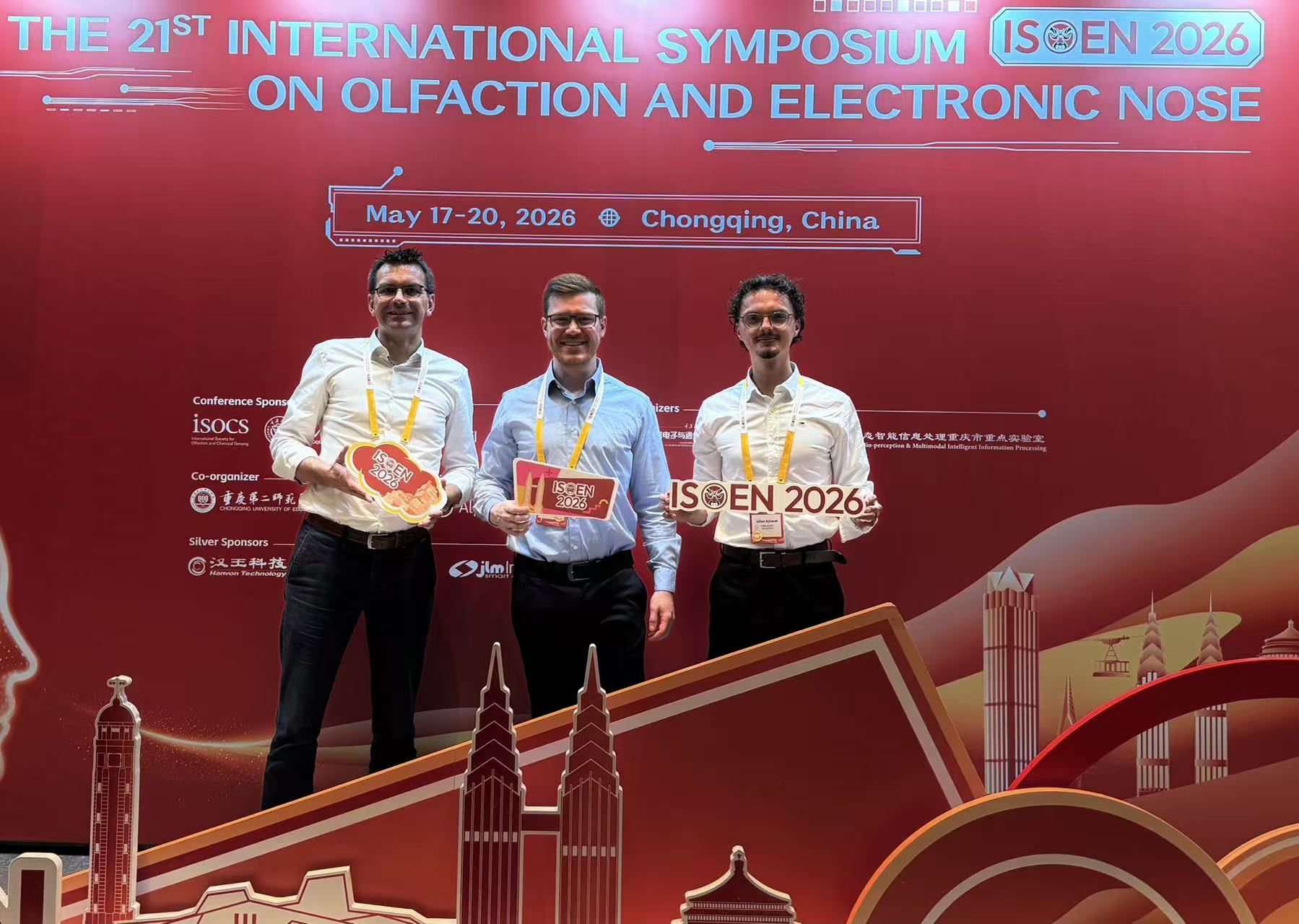
With our SERENADE project partner JLM Innovation:
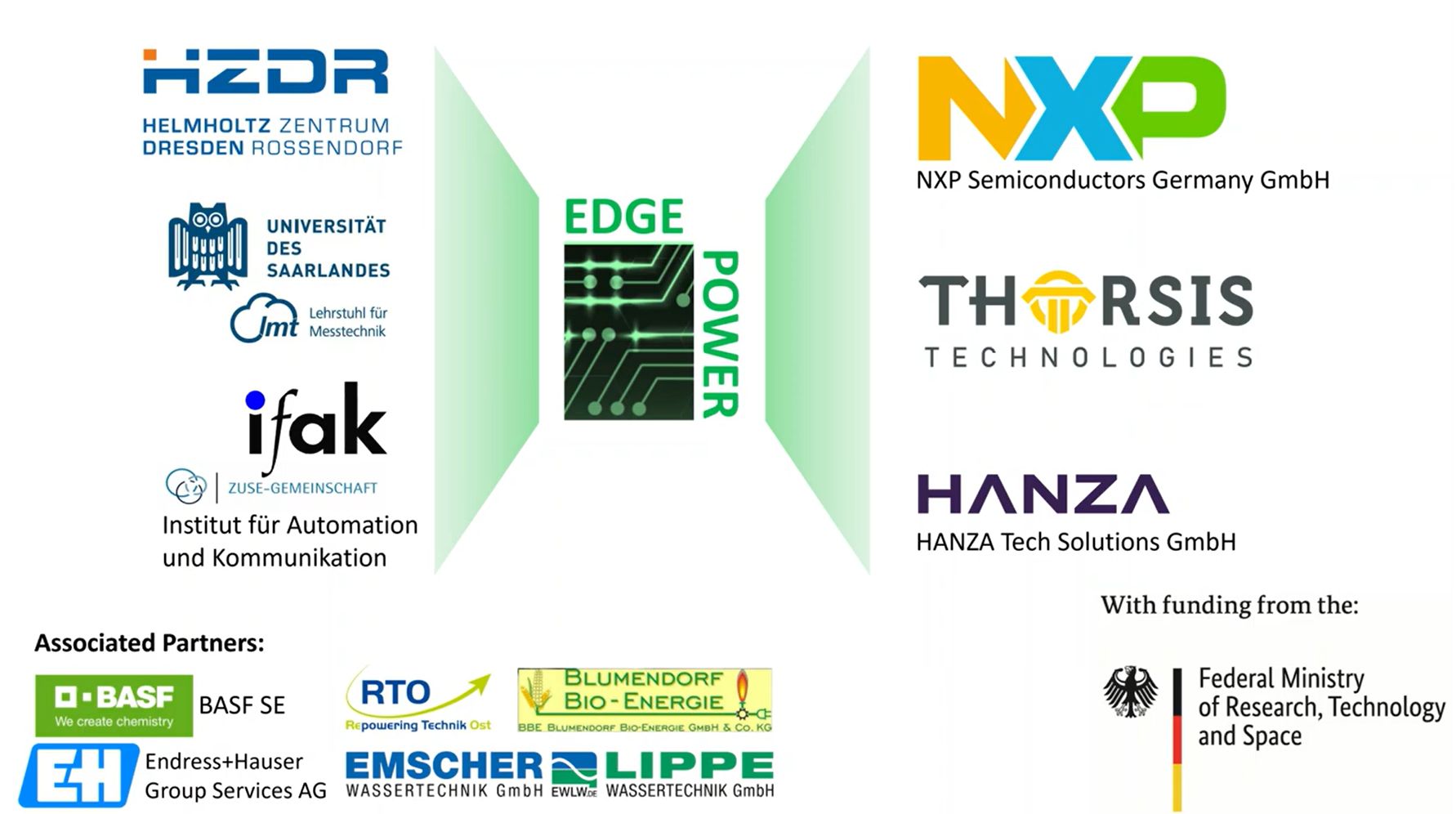
Auf der Fachkonferenz „Edge-Computing 2025: Von der Forschung zur Anwendung“ präsentierte das Edge-Power Konsortium seine gemeinsam erzielten Projektergebnisse. Diese Video-Präsentation ist auch öffentlich verfügbar bei Youtube.
Der Beitrag des Lehrstuhls für Messtechnik waren interpretierbare und energieeffiziente ML-Algorithmen, wobei unser FESC/R (Feature Extraction, Selection and Classification/Regression) Ansatz als tiefe neuronale Netzwerke repräsentiert wurde, um besonders effizient auf AI-Beschleunigern ausgeführt zu werden (im Video dargestellt ab Minute 10:00). Wir danken allen Partnern für die hervorragende Zusammenarbeit.
At the conference “Edge Computing 2025: From Research to Application,” the Edge-Power Consortium presented its joint project results. This video presentation is also publicly available on YouTube.
The Chair of Measurement Technology contributed interpretable and energy-efficient machine learning algorithms, with our FESC/R (Feature Extraction, Selection and Classification/Regression) approach represented as deep neural networks for particularly efficient execution on AI accelerators (presented in the video starting at 10:00). We thank all partners for the excellent collaboration over the course of this project.
Weitere Veröffentlichungen aus dem Edge-Power Projekt / further publications from the Edge-Power project:
 Das Projekt Edge-Power wurde gefördert vom Bundesministerium für Forschung, Technologie und Raumfahrt (BMFTR) in der Fördermaßnahme „Elektroniksysteme für vertrauenswürdige und energieeffiziente dezentrale Datenverarbeitung im Edge-Computing (OCTOPUS)“.
The Edge-Power project was funded by the Federal Ministry for Research, Technology and Space (BMFTR) in the funding measure “Electronic systems for trustworthy and energy-efficient decentralized data processing in edge computing (OCTOPUS)”.

LMT will present two contributions at the Breath Summit:
C. Bur, W. Reimringer, T. Maus, F. Maurer, S. Kreuer:
Simultaneous Analysis of Breath Condensate and Exhaled Breath in an Isolated Porcine Lung Model
Oral presentation, session "inorganics and non-volatiles", Wednesday, September 17, 10.05
C. Bur, M. Stopp, K. Lorenz, N. Nourkami-Tutdibi, M. Zemlin, S. Goedicke-Fritz:
Monitoring the Atmosphere of Neonatal Incubators by Metal Oxide Semiconductor Gas Sensors
Poster presentation